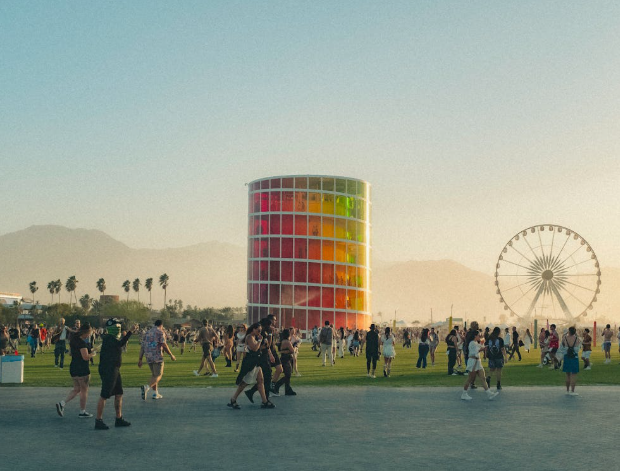
The biggest festivals in America returned this weekend, showcasing music, culture, and fashion. Coachella 2026 brought together a wide range of artists, influencers, and fans, creating an atmosphere that extended beyond just music performances. Some fans have compared this year’s Coachella to 2016’s, a year remembered for its cultural influence and viral moments. While these comparisons are subjective, they reflect how attendees and viewers are engaging with this year’s festival.
Sponsors of this festival have also reintroduced trends popular about ten years ago, contributing to a sense of nostalgia. For example, the Unicorn Frappuccino from Starbucks has reappeared and is circulating widely on social media. This item is exclusive for Coachella goers. The festival fashion has also reflected this revival of 2016 trends, with many attendees wearing styles inspired by earlier “boho” Coachella aesthetics. Some attendees and online users have referred to this year’s festival as “Bieberchella” due to Justin Bieber headlining on Saturday and the continued popularity of his earlier hits. This year’s headliners included Justin Bieber, Sabrina Carpenter, and Karol G, each bringing a distinct style and sound to the festival.
Following Justin Bieber’s performance on weekend one, interest in weekend two tickets increased significantly. Tickets originally started at $550, and resale prices reached around $3,000 for general admission, reflecting the high demand. Bieber performed songs from his new album Swag, along with several of his earlier hits that helped him rise to popularity. His performance has reached audiences beyond the festival itself, including students at La Jolla High. Sophomore Elliot Kowalchuk said, “I heard Justin Bieber was there and played the song Baby.” His set included songs such as “Sorry,” “Beauty and a Beat,” and “Baby,” which were incorporated into his performance. Some attendees described the mix of newer and older songs as appealing to both longtime fans and newer listeners. In addition to his music, Bieber’s merchandise drew attention from festivalgoers. Items such as his “It’s Not Clocking” hoodies were seen throughout the crowd and on social media. The phrase references a previous viral interaction with a fan. Its popularity at the festival shows how viral moments can influence merchandise trends.
Sabrina Carpenter, another headliner, was also a big topic of conversation following an interaction with a fan during her Friday night performance. While preparing to perform her next song, she heard a fan making a “yodeling” sound and responded, “I think I heard someone yodel. Is that what you’re doing? I don’t like it.” The fan responded that it was part of her culture, and Carpenter replied with a comment that some interpreted as a joke. Afterward, some audience members and social media users criticized the exchange as insensitive, while others viewed it as a misunderstanding in a loud and crowded environment. Carpenter later posted an apology online, explaining that she could not clearly see or hear the situation from the stage and did not intend to offend anyone. The incident highlights how quickly moments at large events can spread and be interpreted differently across social media platforms.
Karol G also stood out this year, becoming the first Latina headliner at Coachella. Her performance drew attention for its emphasis on representation and cultural expression. During her set, she brought out an all-female mariachi group from Los Angeles, which added a unique flair to the performance. The inclusion of live musicians and traditional influences contrasted with more typical festival performances and was widely discussed online.