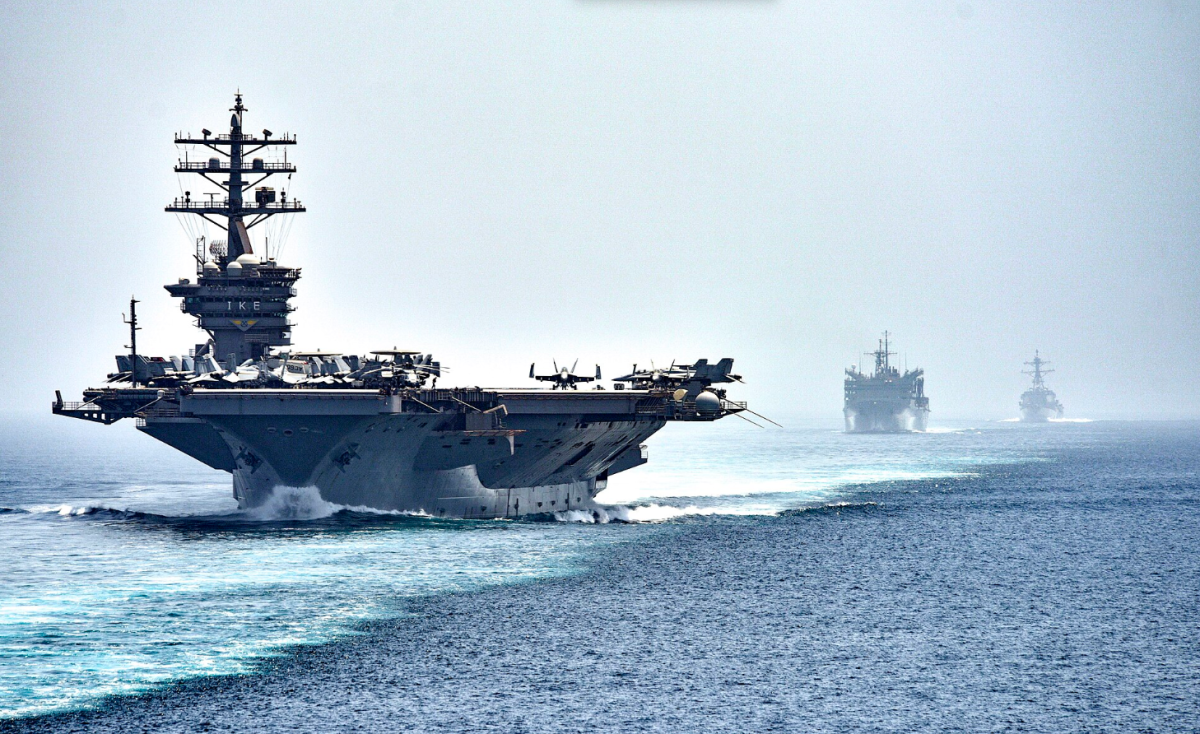
The United States’ blockade of Iranian ports, which began on April 13, has remained in place even after President Trump declared that the Strait of Hormuz was now open. This has been one of the most high-stakes deals in the 2026 US-Israel war with Iran, having immediate and long-term consequences for the global economy and security. According to the BBC, the goal of the U.S. is to break Iran’s economic lifeline by stopping its oil exports, targeting revenue sources, and ending Iran’s control over the critical shipping lane. This blockade is fully cutting off Tehran’s international seaborne trade, which accounts for about 90% of its economy. Iran has responded to the U.S. with tactics such as laying mines and imposing threats. Although not all of the traffic through the strait has stopped, it has become extremely dangerous, disrupting global shipping. Sophomore Sofie Samiei, who has family members in Iran, says, “The U.S. is blockading the strait to put pressure on Iran, while Iran is charging large transit fees, up to $2 million, per ship to go through the strait. If this continues, this situation could increase pressure on Iran to negotiate over its nuclear program and could shift global trade towards American oil.”
The Strait of Hormuz is one of the most critical maritime passageways in the world; around 20% of global oil passes through it due to its position as a chokepoint between the Persian Gulf and the open ocean. Because of the Strait of Hormuz’s importance, the disruption caused by the blockade could trigger a global crisis. While a fragile agreement remains in place, the US blockade has yet to be lifted, and the Iranian government has said that it will maintain “tight restrictions” over the waterway. Energy prices have already increased, and fears are rising rapidly of a wider economic and military collapse.