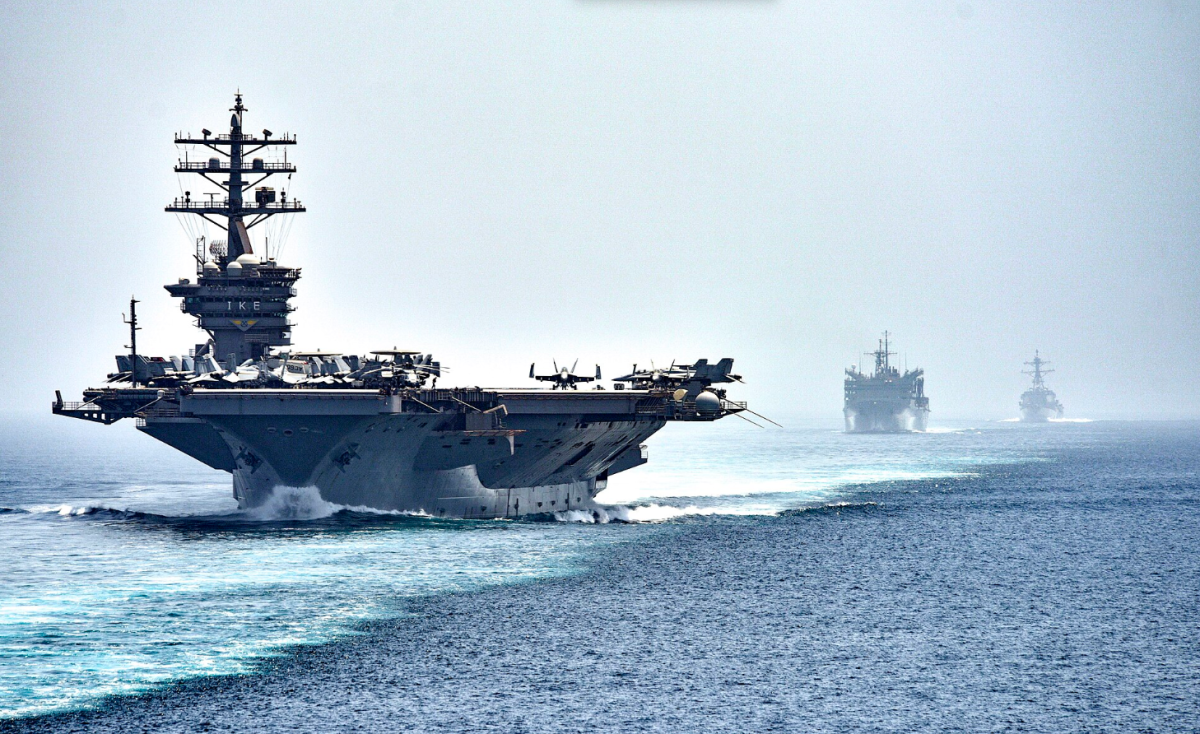

On February 28, in what is being called “Operation Roaring Lion” and”Epic Fury”, the U.S and Israel carried out coordinated military strikes on targets in Iranian leadership sites. It was the morning in Iran when their aircraft and missiles struck locations in Tehran and other Iranian cities. These strikes resulted in the death of Iran’s Supreme Leader, Ali Khamenei, as well as many members of his family, cabinet, and high-ranking military officials. Additionally, 13 US Service Members were killed. Israeli officials and President Donald Trump argued that Iran has been developing advanced nuclear capabilities and military action was necessary to eliminate its nuclear program. Junior Ephraim Rosenstock expressed his view on the conflict: “Trump gambled, and I hope the result is a regime change in which the innocent Iranian people get the freedom they deserve…Also, it should be noted that these acts aren’t aligned with Trump’s campaign promises, good or bad; it’s hypocrisy. Foremost, I’m deeply worried about the lives of innocent civilians who are inevitably going to be caught in the crossfire.”
On March 2, 2026, the Iranian-backed group, Hezbollah, launched bombs toward Northern Israel from Lebanon, and Israel shot most down. Additionally, Kuwait air defenses mistakenly shot down three U.S. Air Force fighters during Iranian attacks, costing the US hundreds of millions of dollars. In recent days, a British military base in Cyprus was attacked with drones by Iran, resulting in a small amount of damage. Currently stationed in the Mediterranean are NATO defenses ready to intercept Iranian missiles.
Junior, Nicolas Arenas, says, “Israel and the U.S only want what’s best for their people. I believe the attacks on Iran are only in defense…I believe that it is a very complicated situation, but it is a fact that innocent people in each country are dying, and I wouldn’t wish that for anyone. At what point does this stop?” Human rights advocates and organizations have pointed to the alleged war crimes that have been committed against the Iranian people, with US-Israeli missiles striking an elementary school and killing an estimated 175 children.
Debates over missile strikes and Iran’s nuclear program have been fueled by the economic impacts of the conflict. With 5 of the 10 largest oil producers in the world — Saudi Arabia, Iraq, the UAE, Iran, and Kuwait — having attacked or been attacked amidst the war, world oil production has been shaken. Before the US and Israel launched missiles, the average price for a barrel of oil was around $60-$70. Since the conflict began, oil prices have soared, peaking at $120 a barrel on March 9. Especially in California, the state with the highest gas prices in America, this price increase could have a substantial impact on the finances of everyday people.
From the killing of Iran’s Supreme Leader, Ali Khamenei, to the exploding price of oil, each factor has added more fuel to the already heated environment in the Middle East. Recently, Iranian Foreign Minister Abbas Araghchi said Tehran would “continue this resistance without hesitation.”