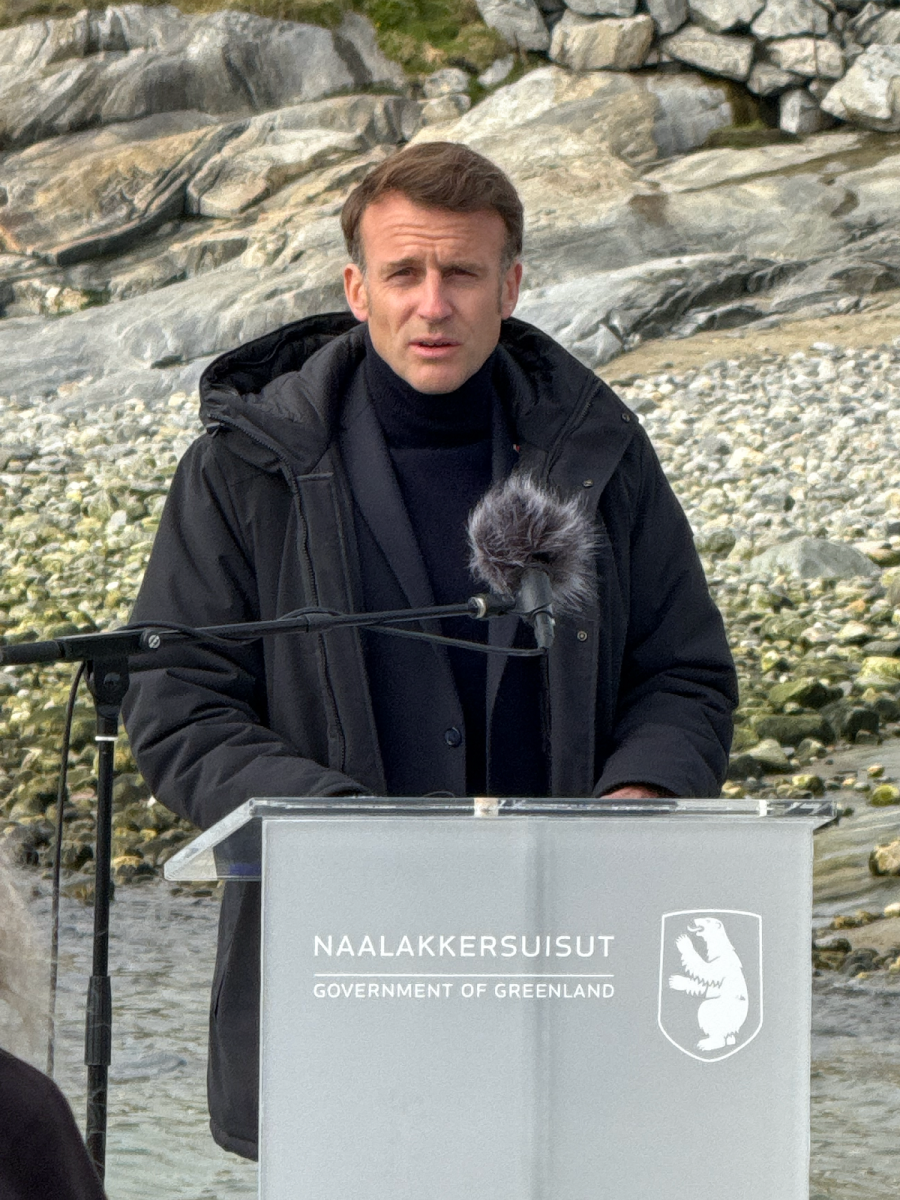
Greenland, the largest island on the globe, has been thrown onto the world stage due to President Trump’s mission to bring the Arctic territory under U.S control, threatening military action if he is unable to buy the country. Trump justifies this by claiming that owning the island is a matter of national security, despite the US already having numerous military bases on the island. This situation has reignited controversy among world leaders, the people of Greenland, and American citizens. Greenland is an autonomous country within the Kingdom of Denmark and has a population of about 56,000 people. Despite this, Greenland holds immense strategic importance due to its location between North America and European countries, including Russia, and plays a crucial role in Arctic defense. Additionally, Greenland holds large deposits of precious natural resources, including rare-earth minerals essential to modern technology, such as phones, military equipment, and vehicles. While these resources are currently buried under tons of ice, they may become accessible in the coming years due to global warming. Cassie Ibarra, a freshman, has suggested economic motives may be fueling Trump’s interest in the country: “I think he’s interested in its natural resources, and just for the sake of wanting land.”
Responses to Trump’s statements have varied. “I don’t really understand Trump’s motivation for wanting Greenland,” said AP European History teacher, Mr. Atwell. Denmark, and by extension Greenland, is a member of NATO and has allowed the United States nearly unrestricted access to build military bases on the island and to run training operations, prompting opponents of the plan to question the rationale for wanting ownership of the country. Freshman Cesar Mariscal added, “I was very surprised because I didn’t expect him to go for Greenland, but I also feel bad for the people who live there,” reflecting how 85% of Greenlanders don’t want to join the United States, according to The Guardian. “I think they are starting to hate America and Americans because of it,” Mr. Atwell noted.
The situation has also created fear about the future of NATO, a military alliance that includes Denmark and Greenland, as well as the United States, since no member state has ever threatened the invasion of another. Prime Minister of Denmark, Mette Frederiksen, has stated that a US invasion of the island would mean the end of NATO, a feeling evidently shared by other members such as France, the UK, and Germany, who have all sent troops to Greenland in the last couple of weeks. After the World Economic Forum in late January, President Trump has backtracked from his threat of putting a 10% tariff on goods entering the US from the 8 nations that have troops stationed in Greenland, claiming to have made progress on a deal Europeans deny exists. As tensions continue to rise, the situation raises questions about sovereignty and how powerful nations interact with smaller territories in the modern world.